Imagine a time when every calculation, budget, and financial report was crafted by hand, using pencils, paper, and erasers. Before computers entered the scene, professionals relied on manual ledgers and adding machines, making even simple tasks time-consuming and prone to error.
This article delves into the history of the spreadsheet before excel, tracing the remarkable innovations and competition that paved the way for modern digital tools. From paper-based accounting to the revolutionary launch of VisiCalc and Lotus 1-2-3, we will uncover the milestones that shaped today’s data-driven world.
As you read, consider how far spreadsheets have come and how their evolution continues to impact business and daily life. Reflect on your own experience with these tools, and prepare to discover lessons from the past that still resonate in the digital age.
The Era Before Digital Spreadsheets: Manual Calculations and Ledgers
Imagine managing business finances in a world without digital convenience. The story of spreadsheet before excel begins here, with rows of paper, careful handwriting, and the ever-present fear of calculation mistakes.

The World of Paper-Based Accounting
For decades, businesses relied on handwritten ledgers, journals, and balance sheets to track finances. Every transaction was carefully recorded on paper, requiring patience and precision.
Accountants armed themselves with pencils, erasers, rulers, and adding machines. Calculations were painstakingly checked and rechecked, especially for large payrolls or inventories. For example, Major League Baseball teams in the late 1970s calculated payroll by hand, with clerks double-checking columns of numbers for accuracy.
The spreadsheet before excel was a literal sheet of paper, prone to errors and time-consuming updates. Mistakes could ripple through entire reports, causing delays and confusion. Professionals recall the anxiety of end-of-month reconciliations, where even a small error could throw off the entire balance.
Common challenges included:
- High error rates and tedious recalculation
- Limited scalability for growing businesses
- Slow turnaround for financial reports
These obstacles highlighted the urgent need for a better solution.
Early Attempts at Automation
As business grew, so did the complexity of their calculations. The earliest attempts to automate the spreadsheet before excel involved mechanical calculators and adding machines, which sped up arithmetic but still required manual entry.
By the mid-20th century, punch cards and mainframe computers entered the scene. Large organizations used punch cards for payroll and inventory, processing data in batches overnight. However, these early computer systems were slow, lacked interactivity, and required specialized operators.
A simple change could mean waiting hours, or even days, for results. The gap between manual spreadsheets and these early automated tools was significant. Many businesses still relied on paper for flexibility and immediate feedback.
The limitations of these systems underscored the need for something more dynamic and user-friendly.
The Birth of the Spreadsheet Concept
The concept of a spreadsheet before excel began as a grid for organizing numbers and calculations. This idea evolved with the development of LANPAR in 1969, the first electronic spreadsheet designed for mainframes.
LANPAR introduced real-time recalculation, a breakthrough for telecommunications companies managing complex billing. However, mainframe solutions like LANPAR were inaccessible to most businesses, as they required expensive hardware and trained staff.
The disconnect between these advanced but exclusive systems and everyday users was clear. Still, the foundation was laid for future personal computer spreadsheet software.
For a deeper look at how these early innovations shaped the evolution of spreadsheets, see The work of spreadsheets.
The Pain Points That Drove Innovation
Despite incremental advances, the spreadsheet before excel remained a source of frustration for many. Manual updates were slow and error-prone, and even mechanical aids could not keep pace with business demands.
There was a growing desire for tools that could instantly update totals, recalculate figures, and simplify complex data management. Business leaders recognized the competitive edge that faster, more flexible analysis could provide.
This persistent need set the stage for the coming digital revolution. With the rise of personal computing on the horizon, the world was ready for a new era of interactive, user-friendly spreadsheets.
VisiCalc: The First Killer App for Personal Computers
The story of the spreadsheet before excel would not be complete without exploring VisiCalc. This software marked a turning point, bringing the power of digital calculation to ordinary business users. VisiCalc’s launch forever changed how companies approached financial modeling and data management, setting the stage for a new era of productivity software.

The Genesis of VisiCalc
In the late 1970s, Dan Bricklin, inspired by the laborious process of manual recalculations, envisioned a digital tool that could replicate and automate the grid structure of traditional accounting sheets. With Bob Frankston’s programming expertise, they developed VisiCalc, launching it in 1979 for the Apple II. This was the first widely adopted spreadsheet before excel, offering features like an interactive grid, real-time recalculation, and formula entry. The software’s appeal helped drive Apple II sales past one million units, earning VisiCalc the title of the first “killer app” for personal computers. For a deeper dive into its origins, see VisiCalc: The First Electronic Spreadsheet.
How VisiCalc Worked
VisiCalc introduced a user-friendly interface that mirrored the familiar paper spreadsheet before excel. Users navigated a grid of rows and columns, entering numbers or formulas directly into cells. Instant recalculation across the sheet made updates effortless, eliminating tedious manual math. Unlike earlier manual methods, VisiCalc allowed business professionals to modify one value and see totals update everywhere. This real-time feedback was revolutionary, especially for accountants handling budgets or forecasts. The learning curve was gentle, making digital spreadsheets accessible to a broader audience than ever before.
| Feature | Manual Spreadsheets | VisiCalc |
|---|---|---|
| Calculation speed | Slow | Instant |
| Error correction | Tedious | Simple/automatic |
| Scalability | Limited | Improved |
VisiCalc’s Business and Market Impact
The arrival of VisiCalc rapidly transformed the business landscape. Accountants, small business owners, and financial analysts quickly saw the value of a spreadsheet before excel that could automate calculations and streamline reporting. By 1980, over one million copies had been sold, and VisiCalc became a major factor in the widespread adoption of personal computers in offices. Its success spurred versions for platforms like the Atari, IBM PC, and Commodore. Most importantly, VisiCalc established a new software category: productivity applications, paving the way for an explosion of innovation in business tools.
Limitations and Challenges of VisiCalc
Despite its groundbreaking role, VisiCalc faced several limitations. The graphics were basic, offering only text-based grids without advanced data visualization. Early hardware imposed performance bottlenecks, restricting spreadsheet size and speed. Handling large datasets or complex calculations was difficult, often leading to slowdowns or crashes. As demand for more robust features grew, competitors entered the market, highlighting the need for greater power and flexibility. These challenges would soon shape the next generation of spreadsheet before excel solutions.
The Legacy of VisiCalc
VisiCalc’s influence on the spreadsheet before excel landscape cannot be overstated. It laid the foundation for all future spreadsheet software, earning recognition as the software that jumpstarted the personal computing revolution. The lessons from VisiCalc—such as prioritizing user experience and making complex calculations accessible—guided the design of subsequent programs. Its legacy endures, not only in modern business practices but also in the DNA of every productivity tool that followed.
The Rise of Competition: Lotus 1-2-3, SuperCalc, and Multiplan
The early 1980s marked a turning point for the spreadsheet before excel, as a new wave of software innovation transformed personal and business computing. With the success of VisiCalc, competitors were eager to create faster, more powerful, and user-friendly alternatives. This competitive surge not only raised the bar for spreadsheet features but also set the stage for the digital data tools we rely on today.

The Emergence of Lotus 1-2-3
In 1983, Lotus 1-2-3 launched for the IBM PC, rapidly claiming dominance in the spreadsheet before excel era. Mitch Kapor envisioned a tool that combined spreadsheet, charting, and database functions in a single package. Lotus 1-2-3 quickly captured over 50 percent of the market, becoming the standard for business analysis.
What set Lotus apart was its speed, reliability, and integration. Large corporations flocked to it, replacing manual processes with digital workflows. As described in Lotus 1-2-3’s Market Dominance, this software was pivotal in establishing spreadsheets as core business tools. Its influence pushed the industry to rethink what a spreadsheet before excel could achieve.
Innovations and Features That Set Lotus 1-2-3 Apart
Lotus 1-2-3 introduced innovations that redefined the spreadsheet before excel. The menu-driven interface and keyboard shortcuts allowed users to work quickly and efficiently. Integrated graphing and database features enabled more comprehensive data analysis.
Macros became a standout feature, allowing repetitive tasks to be automated with ease. Support for larger spreadsheets and enhanced printing options made the software appealing for complex business operations. These advancements helped drive IBM PC sales, as companies standardized on Lotus 1-2-3 for their financial and analytical needs.
The Role of SuperCalc and Other Early Contenders
SuperCalc entered the spreadsheet before excel landscape in 1980, targeting CP/M operating systems. It became popular among early business users due to its compatibility and user-friendly design. SuperCalc offered features that rivaled VisiCalc and Lotus 1-2-3, making it a strong competitor.
Other notable contenders included Multiplan by Microsoft, As-Easy-As, and Quattro Pro. This intense competition accelerated innovation, with each program striving to offer better usability and advanced capabilities. The table below summarizes key differences:
| Program | Platform | Key Features |
|---|---|---|
| Lotus 1-2-3 | IBM PC | Integrated charting, macros |
| SuperCalc | CP/M, DOS | Compatibility, ease of use |
| Multiplan | Multiple | Cross-platform, simplicity |
Microsoft’s Early Foray: Multiplan
Microsoft’s Multiplan debuted in 1982 as another option in the spreadsheet before excel market. Designed for multiple platforms, it focused on user-friendly navigation and broad compatibility. While Multiplan was easier to use than some rivals, it struggled to match the advanced features and performance of Lotus 1-2-3.
Despite its limitations, Multiplan was a vital stepping stone for Microsoft. The lessons learned from Multiplan’s development directly influenced the creation of Excel, which would later redefine the spreadsheet before excel landscape.
Market Dynamics and the Battle for Dominance
The spreadsheet before excel market was shaped by fierce competition, strategic partnerships, and aggressive marketing. Software companies bundled their products with hardware, offered competitive pricing, and emphasized platform compatibility to attract users.
Switching costs became a key factor, as businesses invested time and resources into learning specific programs. Rapid technological advancements meant that only the most adaptable and innovative solutions survived. The battle for dominance in the spreadsheet before excel era set the foundation for the software ecosystems we know today.
The Analytics Doctor: Expert Solutions for Modern Spreadsheet Challenges
For those navigating the complexities of modern spreadsheets, the legacy of the spreadsheet before excel lives on. The Analytics Doctor bridges historical concepts with today’s powerful Excel features. Business professionals and analysts can benefit from expert consulting, tailored training, and hands-on support.
Whether you need custom automation, workflow optimization, or advanced Excel skills, The Analytics Doctor empowers users to unlock the full potential of their data tools. This service continues the tradition of innovation that began in the spreadsheet before excel era.
The Evolution to Microsoft Excel: A New Era Begins
The transition from spreadsheet before excel to Microsoft Excel marks a turning point in digital productivity. As businesses increasingly demanded flexible, user-friendly tools, Excel emerged as a transformative force, reshaping how organizations approached data and analysis.
The Launch of Microsoft Excel
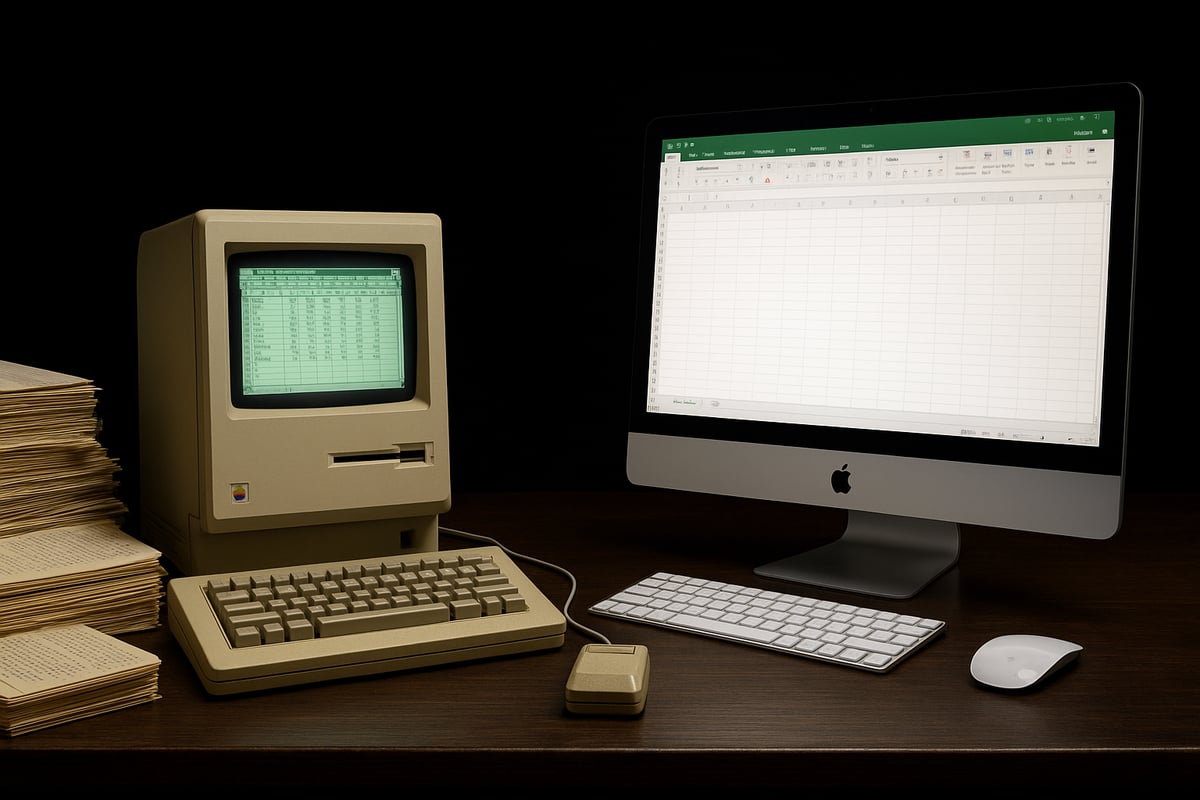
In 1985, Microsoft released Excel for the Macintosh, offering a graphical interface and mouse support that set it apart from any spreadsheet before excel. By 1987, Excel arrived on Windows, quickly gaining traction among creative professionals and business users alike.
The intuitive design allowed for easier data entry and visualization. Integration with other Microsoft Office products made Excel a natural choice for those seeking seamless workflows. These early versions paved the way for Excel's dominance in the office software market.
Key Innovations Introduced by Excel
Excel introduced several groundbreaking features that distinguished it from every spreadsheet before excel:
- Pivot tables enabled advanced data analysis and summarization.
- Enhanced charting tools helped users visualize trends and patterns.
- A powerful formula engine expanded the range of calculations.
- Macro support and Visual Basic for Applications (VBA) automated complex tasks.
- Collaboration features (in later versions) allowed real-time data sharing.
These innovations made Excel a versatile platform for both simple budgets and intricate financial models.
Excel’s Rise to Market Dominance
Throughout the 1990s, Excel steadily overtook every major spreadsheet before excel, including Lotus 1-2-3. By the late 1990s, Excel commanded over 90 percent of the spreadsheet market. Organizations migrated from legacy systems to Excel, drawn by its robust features and integration within the Microsoft Office suite.
This shift is well-documented in the Evolution of Spreadsheet Software, which details how Excel's usability and innovation led to widespread adoption. Excel's rise reshaped business processes and set new standards for productivity applications.
The Impact on Business and Data Management
Excel revolutionized how companies handled data, building on the strengths and lessons from every spreadsheet before excel. Financial modeling, reporting, and analytics became more efficient and reliable. Businesses experienced:
- Significant reductions in calculation errors
- Less manual data entry
- Empowerment of non-technical users to perform complex analysis
Excel also played a major role in the emergence of business intelligence, enabling data-driven decision-making across industries.
Lessons from the Transition Era
The journey from spreadsheet before excel to Microsoft Excel highlights the critical importance of innovation and adaptability. Excel succeeded by continuously evolving, listening to user needs, and outpacing competitors such as Lotus 1-2-3.
Software companies learned that staying relevant means never becoming complacent. The pioneering efforts of early spreadsheet developers continue to influence modern productivity tools, ensuring the legacy of this digital transformation endures.
Technological and Cultural Shifts in Spreadsheet Use
The journey from spreadsheet before excel to today’s powerful digital tools is marked by remarkable technological and cultural shifts. These changes revolutionized how people interact with data, making spreadsheets more accessible, collaborative, and impactful than ever before.

The Role of Hardware Advancements
The story of spreadsheet before excel is inseparable from the evolution of computer hardware. When early spreadsheets first appeared, they relied on the limited memory and slow processors of early personal computers. As technology advanced, faster processors and greater memory capacity enabled spreadsheets to handle much larger, more complex datasets.
Affordable personal computers, such as the IBM PC and the Apple Macintosh, became platforms for rapid spreadsheet innovation. With each hardware leap, spreadsheets could process more data, offer more features, and support richer analysis. This synergy between hardware and software created a foundation for the widespread adoption of spreadsheet before excel, making powerful data tools available to a growing audience.
User Experience and Interface Evolution
One of the defining breakthroughs in the spreadsheet before excel era was the shift from command-line interfaces to graphical user interfaces (GUIs). Early spreadsheets required users to memorize commands, but the arrival of GUIs transformed usability. Features like mouse-driven navigation, drag-and-drop functionality, and intuitive menus made spreadsheets accessible to non-technical users.
Templates and wizards further simplified complex tasks, reducing the learning curve for new users. This focus on user experience accelerated the popularity of spreadsheet before excel, paving the way for mass adoption. The spreadsheet became a tool anyone could use, not just programmers or accountants.
Collaboration and the Internet Era
The spreadsheet before excel began as a solitary tool, but the rise of networked computing changed everything. Early on, file sharing and multi-user access enabled teams to work together, even if only one person could edit at a time. As the internet matured, cloud-based spreadsheets like Google Sheets introduced real-time collaboration and version control.
With these innovations, spreadsheets evolved into dynamic, shared workspaces. Teams could analyze data together, track changes, and ensure everyone worked from the latest version. This transformation made spreadsheet before excel a collaborative engine for business, education, and beyond.
The Expanding Role of Spreadsheets in Business
The impact of spreadsheet before excel on business cannot be overstated. What started as a tool for basic calculations quickly became an indispensable platform for budgeting, forecasting, data analysis, and reporting. Industries from finance to marketing adopted spreadsheets for automation and efficiency.
Macros enabled users to automate repetitive financial tasks, saving time and reducing errors. As businesses demanded more advanced analysis, spreadsheets evolved into analytical powerhouses. To see how these capabilities transformed business, explore Analytical spreadsheet evolution for a deeper dive into the shift from manual to digital analysis.
The Cultural Impact of Spreadsheets
The spreadsheet before excel became a symbol of digital empowerment. It democratized data analysis, allowing professionals across industries to make informed decisions without specialized training. Mastering spreadsheet skills became essential for career advancement and business growth.
Anecdotes from accountants and analysts highlight how spreadsheets changed daily workflows, making complex analysis routine. For a broader perspective on the milestones in this journey, the History of Spreadsheets provides a detailed timeline from early innovations to modern platforms. The cultural legacy of spreadsheet before excel is clear: it transformed how we work, think, and collaborate with data.
Lessons Learned and the Ongoing Evolution of Spreadsheets
The journey from the spreadsheet before excel to today’s digital tools offers powerful lessons for software innovation. The rapid pace of change, driven by user needs and technological advances, continues to shape how businesses interact with data.
Innovation and Adaptability as Keys to Survival
The history of spreadsheet before excel demonstrates that innovation is essential for survival in the software industry. VisiCalc and Lotus 1-2-3 both rose quickly by solving real-world problems, but failed to adapt when the market shifted. Companies that became complacent or ignored user feedback lost ground to more agile competitors.
For modern developers and business leaders, the lesson is clear: anticipate change, listen to your users, and be ready to pivot. The spreadsheet before excel era reminds us that even the most successful products can fade if they fail to evolve.
The Lasting Legacy of Early Spreadsheet Pioneers
Pioneers like Dan Bricklin, Bob Frankston, and Mitch Kapor fundamentally changed the business world with their early innovations. The spreadsheet before excel was a catalyst for the personal computing revolution, making complex calculations accessible to everyone. Their work laid the foundation for today’s data-driven environment.
To understand how these breakthroughs shaped modern tools, explore this Spreadsheet programming history resource, which details the transition from manual methods to sophisticated digital platforms. The influence of these early visionaries remains central to productivity software today.
The Modern Spreadsheet Landscape in 2025
In 2025, the legacy of spreadsheet before excel is visible in the dominance of Excel and the rise of cloud-based alternatives like Google Sheets. Modern spreadsheets now integrate AI, automation, and real-time collaboration, making them indispensable for professionals across all industries.
Many of today’s Excel-driven data processes build directly on the innovations of the past. If you want to see how these modern tools are evolving, check out Excel-driven data processes for insights on current trends and best practices.
Looking Ahead: What’s Next for Spreadsheets?
As technology advances, the future of spreadsheet before excel continues to inspire. Expect to see new features powered by AI, voice commands, and even augmented reality interfaces. While new “killer apps” may emerge, the need for flexible, user-friendly data tools remains constant.
Reflecting on the journey from spreadsheet before excel to today’s innovations, it is clear that adaptability and creativity will drive the next chapter in this ongoing digital story.