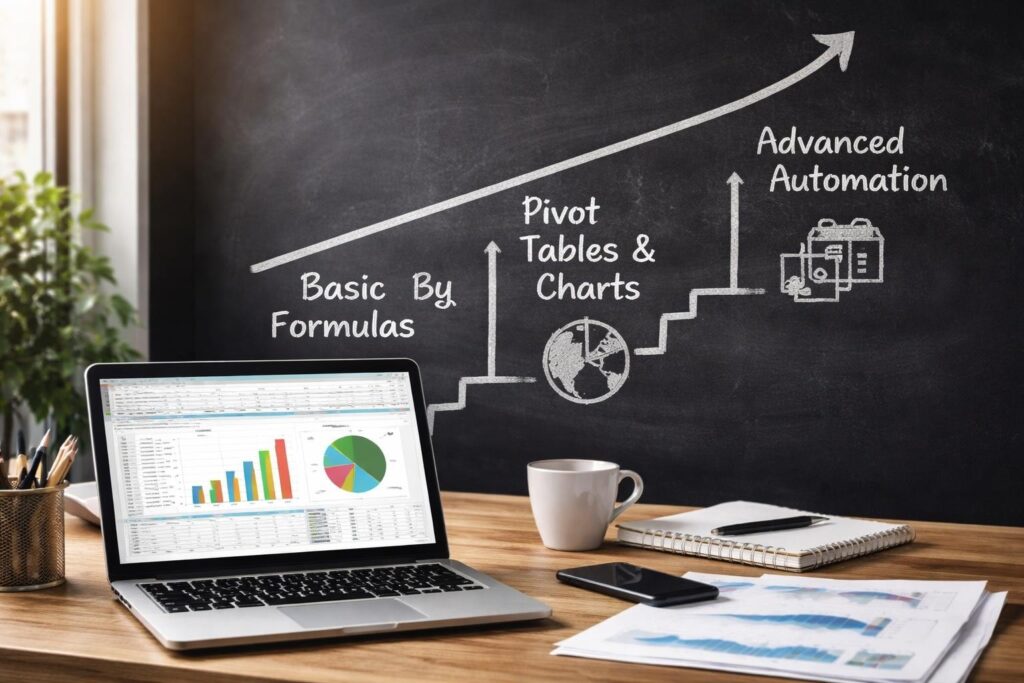
Businesses and organizations throughout Conroe, Texas, are discovering the transformative power of well-designed spreadsheets. Whether you're managing budgets for a growing company, tracking student data at a local school, or organizing environmental compliance reports, excel templates conroe professionals rely on can save countless hours while reducing errors. The right template doesn't just organize information-it creates a framework for better decision-making, clearer communication, and more efficient workflows across every department and industry.
Understanding the Value of Excel Templates for Conroe Businesses
Excel templates serve as pre-built frameworks that eliminate the need to create spreadsheets from scratch. For Conroe's diverse business community, these tools represent both time savings and consistency across operations.
Local businesses benefit from templates that address specific regional needs. From tracking seasonal fluctuations in retail sales to managing construction project timelines in one of Conroe's fastest-growing sectors, the right template adapts to your industry while maintaining professional standards. Templates also reduce training time-new employees can step into established systems rather than learning unique, custom-built spreadsheets that only one person understands.
Industry-Specific Template Applications
Different sectors across Conroe require specialized approaches to data management. Manufacturing companies need production tracking sheets, while service businesses benefit from client management templates and billing systems.
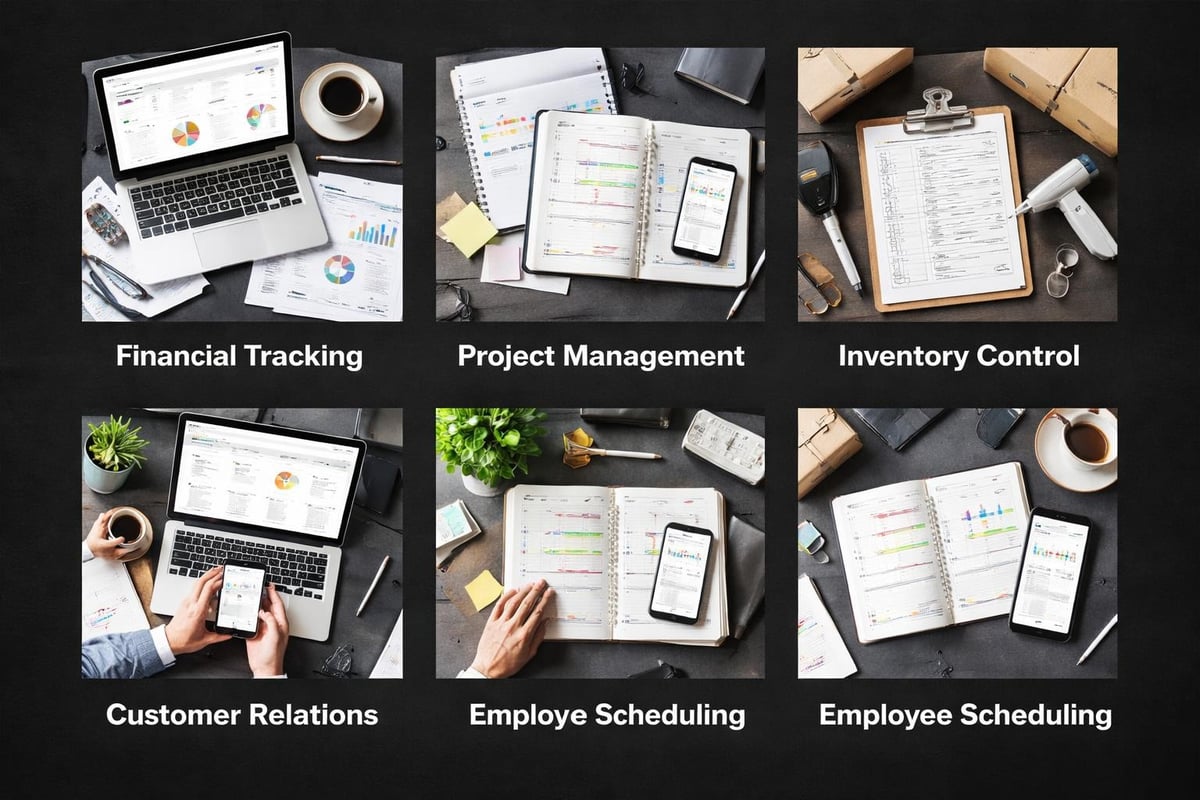
Common template categories include:
- Financial tracking and budget management
- Project planning and resource allocation
- Inventory and supply chain monitoring
- Customer relationship management
- Employee scheduling and payroll preparation
- Performance metrics and KPI dashboards
The Conroe Independent School District utilizes various Excel templates for administrative purposes, demonstrating how educational institutions leverage these tools for everything from attendance tracking to budget planning. Similarly, businesses can adapt educational templates for training programs and staff development initiatives.
Essential Excel Templates for Financial Management
Financial clarity drives business success, making financial templates among the most valuable resources for Conroe entrepreneurs and established companies alike. These templates range from simple expense trackers to complex financial models.
Budget templates form the foundation of financial planning. A well-structured budget template includes categories for revenue streams, fixed costs, variable expenses, and projections for future quarters. For businesses working with Excel financial modeling, these templates can incorporate advanced formulas that automatically calculate variances, growth rates, and financial ratios.
Cash Flow and Expense Tracking
Cash flow management separates thriving businesses from those that struggle. Templates designed for cash flow tracking provide visibility into money movement, helping Conroe business owners anticipate shortfalls and capitalize on surplus periods.
| Template Type | Primary Use | Key Features | Best For |
|---|---|---|---|
| Monthly Budget | Planning expenses | Category breakdowns, variance tracking | All businesses |
| Cash Flow Forecast | Predicting liquidity | Rolling projections, scenario analysis | Growing companies |
| Expense Report | Reimbursement tracking | Receipt matching, approval workflow | Companies with field staff |
| Invoice Tracker | Payment monitoring | Aging reports, collection reminders | Service businesses |
The City of Conroe's financial reporting demonstrates the complexity of municipal finance management. While your business may not require this level of detail, the principles of comprehensive financial tracking apply across organizations of all sizes. Creating templates that match your complexity level ensures you capture necessary information without overwhelming your team.
Project Management Templates That Drive Results
Conroe's construction boom and expanding business sector demand robust project management tools. Excel templates excel at breaking down complex projects into manageable tasks with clear timelines and resource allocations.
Gantt chart templates visualize project timelines, showing task dependencies and critical path activities. These visual tools help teams understand how delays in one area impact overall project completion. For businesses managing multiple simultaneous projects, master tracking templates consolidate information from individual projects into executive dashboards.
Project management template components:
- Task breakdown structure with responsibility assignments
- Timeline visualization with milestone markers
- Resource allocation and capacity planning
- Budget tracking against project phases
- Risk register with mitigation strategies
- Change request logging and approval tracking
When creating dashboards in Excel, project managers can combine data from multiple templates to provide stakeholders with real-time status updates. These dashboards pull information from task lists, budget trackers, and resource calendars to create comprehensive project health indicators.
Templates for Regulatory Compliance and Reporting
Conroe businesses operating in regulated industries face significant documentation requirements. Excel templates standardize compliance reporting, ensuring nothing falls through the cracks while creating audit trails.
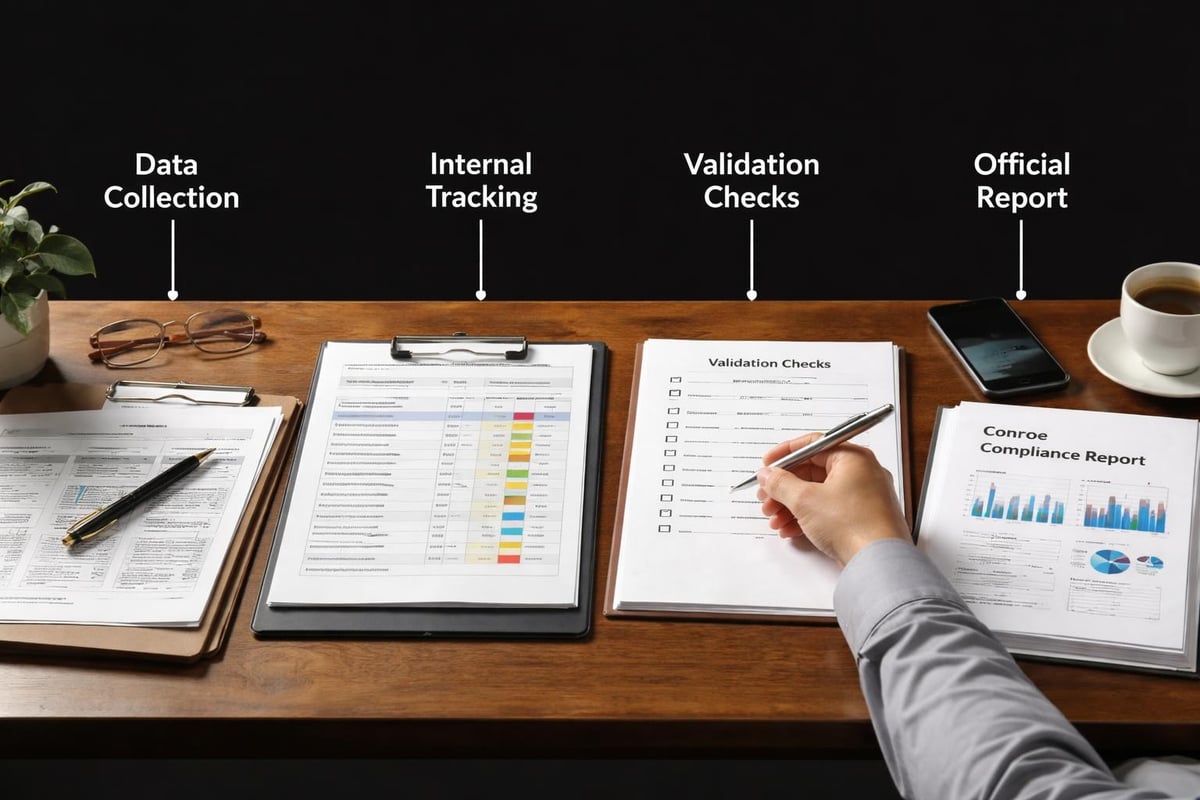
The Texas Commission on Environmental Quality provides specialized templates for water use reporting. This exemplifies how regulatory bodies often specify exact formats for data submission. Companies can build internal tracking templates that feed into these official reporting formats, streamlining the compliance process.
Building Compliance Tracking Systems
Effective compliance templates include built-in validation rules that prevent data entry errors. Using drop-down lists ensures users select from approved options rather than entering free-form text that might not meet regulatory standards.
Templates should also incorporate deadline tracking with automated alerts. Conditional formatting highlights upcoming submission dates, while formula-driven status indicators show completion percentages for multi-part reports. This proactive approach prevents last-minute scrambles and reduces the risk of missed deadlines that could result in penalties.
Customizing Templates for Conroe-Specific Needs
While generic templates provide starting points, excel templates conroe businesses use most effectively are those customized for local requirements. This means incorporating regional considerations, from seasonal business patterns to local tax structures.
Retail businesses, for example, should adjust inventory templates to reflect Conroe's climate and shopping patterns. Templates for HVAC companies might emphasize summer months when air conditioning service peaks. Similarly, landscaping businesses need templates that account for Texas growing seasons and weather patterns.
Adapting Microsoft Templates
Microsoft offers an extensive library of customizable Excel templates covering numerous business scenarios. These templates provide professional designs with built-in formulas, but they require adaptation for your specific operations.
Start by evaluating which elements align with your needs. Remove unnecessary sections that add complexity without value. Then customize categories, formulas, and formatting to match your terminology and processes. This approach gives you professional-grade templates tailored to your exact requirements.
Customization checklist:
- Replace generic category names with your specific terms
- Adjust formulas to reflect your calculation methods
- Add your company branding and color scheme
- Incorporate local tax rates and regulatory requirements
- Build in data validation to prevent entry errors
- Create user instructions within the template
For businesses seeking Excel consulting services, professional customization ensures templates integrate seamlessly with existing systems while maintaining best practices for formula construction and data integrity.
Educational and Administrative Templates
Conroe's educational institutions and non-profit organizations have unique template needs that differ from commercial businesses. These organizations often manage volunteers, track student performance, and coordinate events with limited administrative resources.
The Conroe ISD maintenance forms demonstrate how educational institutions use templates for operational efficiency. Similar approaches work for volunteer coordination, donation tracking, and program enrollment management.
| Template Purpose | Key Elements | Automation Opportunities |
|---|---|---|
| Volunteer Scheduling | Shift assignments, contact info, skills tracking | Email reminders, coverage gap alerts |
| Student Progress | Grade tracking, attendance, behavior notes | GPA calculations, at-risk student flags |
| Event Planning | Task lists, vendor contacts, budget tracking | Timeline alerts, budget variance warnings |
| Donation Management | Donor information, gift history, tax receipts | Acknowledgment letter generation, annual summaries |
Organizations can find local Excel tutors in Conroe to help staff develop skills for maintaining and modifying these templates. Investing in training ensures templates remain useful as organizational needs evolve rather than becoming obsolete when key personnel leave.
Data Analysis Templates for Business Intelligence
Excel templates conroe professionals use for data analysis transform raw information into actionable insights. These templates combine data collection with analytical tools like PivotTables and dynamic charts.
Sales analysis templates track performance across multiple dimensions-by product, salesperson, region, and time period. Using structured templates ensures consistent data collection that enables meaningful comparisons. When every month's data follows the same format, trend analysis becomes straightforward rather than requiring data cleanup and reconciliation.
Building Effective Analysis Frameworks
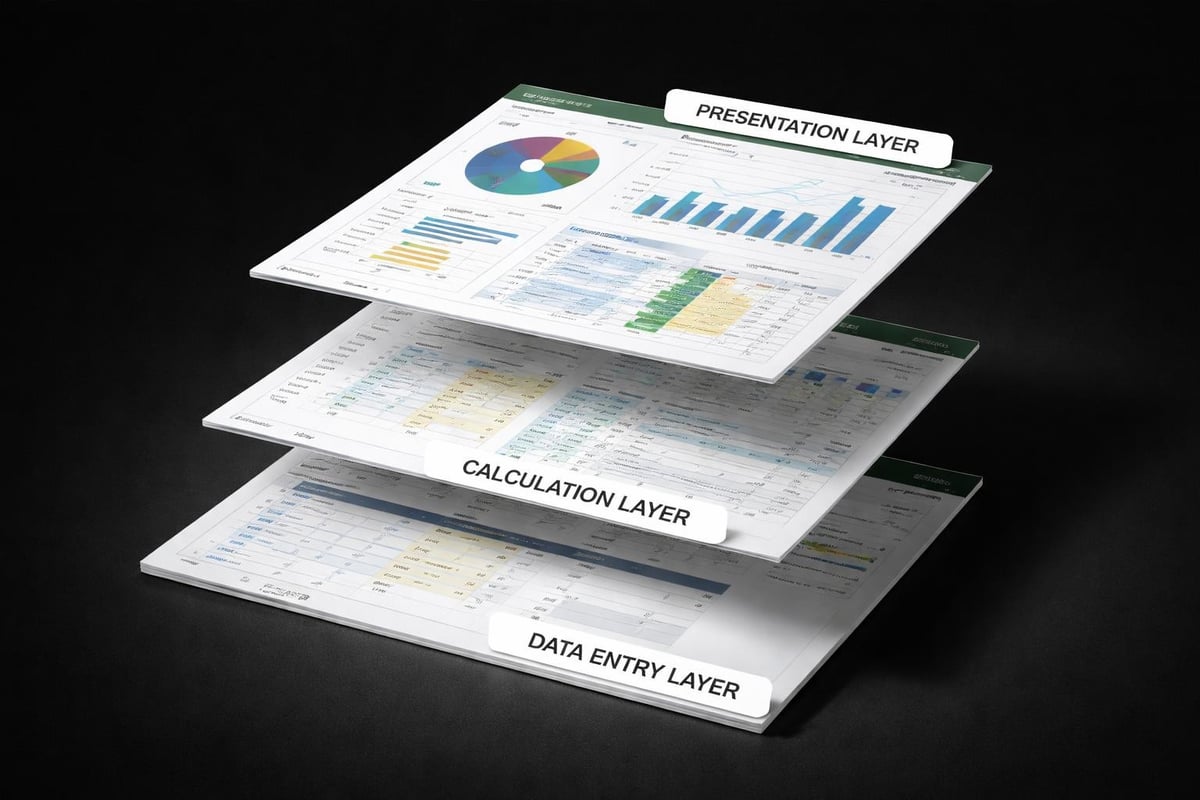
Strong analytical templates separate data input from analysis and presentation. The input sheet captures raw data with minimal formatting, while separate sheets perform calculations and create visualizations. This structure protects formulas from accidental deletion and makes templates easier to troubleshoot when issues arise.
Consider templates that automatically find duplicate values in Excel during data entry. These validation features maintain data quality by preventing the same transaction from being recorded multiple times. Similarly, templates can flag outliers that might indicate data entry errors or unusual business conditions requiring investigation.
Security and Protection for Shared Templates
When multiple team members use the same excel templates conroe organizations depend on, protection features prevent accidental changes to formulas and structure. Protecting cells in Excel allows users to enter data in designated areas while preventing modifications to calculated fields.
Template security involves multiple layers. Worksheet protection locks formulas while allowing data entry. Workbook protection prevents users from adding, deleting, or renaming sheets. For highly sensitive templates, password protection adds another barrier, though it's important to maintain secure records of passwords to avoid losing access.
Security best practices include:
- Locking all formula cells and formatting
- Allowing input only in designated data entry ranges
- Using data validation to control acceptable inputs
- Creating backup copies before distributing templates
- Documenting password recovery procedures
- Training users on proper template usage
For organizations concerned about unauthorized access, understanding how to remove Excel password protection becomes important when legitimate users lose passwords. This knowledge should be restricted to IT personnel and managers to maintain security while preventing data loss.
Automation Opportunities Within Templates
Modern excel templates conroe businesses implement increasingly incorporate automation features that reduce manual work. Simple automations like auto-filling dates or calculating totals provide immediate value, while advanced features can trigger actions based on data changes.
Macros automate repetitive tasks within templates. A macro might format new data entries, generate summary reports, or send email notifications when specific conditions are met. For businesses ready to explore business process automation using Excel, templates provide the perfect starting point since they already define structured processes.
Formulas That Power Smart Templates
Advanced formulas transform static templates into dynamic tools. The XLOOKUP function, which has largely replaced older lookup methods, enables templates to retrieve information from master lists automatically. Understanding VLOOKUP vs XLOOKUP vs HLOOKUP helps template designers choose the right approach for different scenarios.
Conditional logic using IF, AND, and OR functions creates templates that adapt to different situations. A sales commission template might apply different rate structures based on product category and sales volume. An expense approval template could route requests differently based on amount and department.
Array formulas process multiple values simultaneously, making them ideal for templates requiring complex calculations across large datasets. The newer dynamic array functions in Excel 365 simplify many operations that previously required complicated array formulas or helper columns.
Template Maintenance and Version Control
Even the best excel templates conroe professionals create require ongoing maintenance to remain effective. Business processes change, new regulations emerge, and software updates introduce new capabilities that templates should leverage.
Establish a regular review schedule for critical templates. Quarterly reviews ensure templates still match current processes and take advantage of new Excel features. Document changes in a version log within the template itself, noting what changed, why, and when.
| Maintenance Task | Frequency | Purpose |
|---|---|---|
| Formula validation | Monthly | Ensure calculations remain accurate |
| Compatibility testing | After Excel updates | Verify templates work with new versions |
| User feedback review | Quarterly | Identify improvement opportunities |
| Security audit | Semi-annually | Confirm protection settings remain appropriate |
| Backup verification | Monthly | Test that backups restore correctly |
Version control prevents confusion when multiple template versions circulate. Name files with version numbers and dates, and maintain a master directory where users always access the current version. Consider implementing a check-in/check-out system for templates that multiple people modify, preventing simultaneous edits that could cause data loss.
Training Teams to Use Templates Effectively
Templates only deliver value when users understand how to use them properly. Comprehensive training transforms templates from theoretical tools into practical solutions that improve daily operations.
Effective training combines initial instruction with ongoing support. Start with guided walkthroughs showing users where to enter data, how to interpret results, and what to do when errors appear. Learning how to fix errors in Excel empowers users to resolve common issues independently rather than abandoning templates when problems arise.
Create reference guides that live alongside templates. A simple instruction sheet embedded in the workbook or saved as a PDF helps users refresh their memory without requiring formal retraining. Include screenshots showing correct data entry, explanations of what different sections calculate, and troubleshooting tips for common issues.
Training program elements:
- Live demonstrations showing real-world template usage
- Hands-on practice sessions with sample data
- Quick reference guides for common tasks
- Recorded tutorials users can review independently
- Regular Q&A sessions to address emerging questions
- Advanced sessions for power users who customize templates
Organizations can leverage Excel training resources to build internal expertise. When team members understand Excel fundamentals, they can adapt templates to changing needs rather than requiring outside assistance for minor modifications.
Integrating Templates with Other Systems
While excel templates conroe businesses use often function as standalone tools, integration with other systems multiplies their value. Templates can import data from accounting software, export to presentation programs, or feed information into specialized business applications.
Power Query transforms how templates handle external data. Rather than manually copying information from source systems into Excel, Power Query creates refreshable connections that update templates with current data at the click of a button. This approach eliminates transcription errors while ensuring templates always reflect the latest information.
Professional services like those provided by Excel Legal Nurse Consulting and Excel Academy in Conroe demonstrate how Excel templates support specialized professional work. These organizations likely use sophisticated templates integrated with case management systems, client databases, and reporting platforms.
Cloud Collaboration Considerations
As businesses move toward cloud-based workflows, excel templates need to function effectively in collaborative environments. OneDrive and SharePoint enable multiple users to work with the same template simultaneously, but this requires templates designed for collaboration.
Cloud-compatible templates minimize conflicts by directing different users to different input areas. Clear ownership of specific sections prevents multiple people from editing the same cells. Built-in version history in cloud platforms provides safety nets when changes need to be reversed.
Consider building templates that separate data collection from analysis. Individual team members update their assigned sections, while a master template consolidates information from these distributed inputs. This architecture works well for budget planning, where department heads submit their budgets into individual templates that roll up into an organizational view.
Measuring Template Effectiveness and ROI
Implementing excel templates conroe organizations invest time and resources to create should demonstrate measurable value. Track metrics that show how templates improve operations compared to previous methods.
Time savings represent the most obvious benefit. Measure how long tasks took before template implementation versus after. A purchasing manager who previously spent six hours monthly reconciling orders might complete the same work in two hours using a well-designed tracking template. This four-hour monthly savings-48 hours annually-has real cost implications.
Error reduction provides another key metric. Templates with built-in validation and automated calculations eliminate many manual errors. Track error rates in financial reports, inventory counts, or other critical areas before and after template deployment. Fewer errors mean less time spent on corrections and reduced risk of poor decisions based on faulty data.
ROI measurement approaches:
- Calculate time saved across all template users
- Quantify error reduction and associated cost savings
- Measure improved decision-making speed
- Assess reduced training time for new employees
- Evaluate enhanced reporting capabilities
- Track increased data consistency across departments
For organizations working with Microsoft Excel consulting services, professional template development costs can be compared against these benefits to demonstrate clear return on investment. Even modest efficiency gains quickly justify template development expenses when multiplied across many users and months of operation.
Future-Proofing Your Template Library
Technology evolves rapidly, and excel templates conroe professionals rely on today need to remain viable as Excel itself changes. Microsoft continuously adds features that can enhance template functionality, from new functions to improved collaboration tools.
Build templates using current best practices rather than legacy approaches. This means favoring newer functions like XLOOKUP over older ones, using tables instead of cell ranges, and implementing dynamic arrays where appropriate. Templates built with modern features adapt more easily to future updates.
Document template logic thoroughly. When formulas perform complex calculations, add comments explaining the approach. This documentation helps future users-including your future self-understand why templates work the way they do. Without documentation, templates become black boxes that people fear modifying.
Consider scalability from the start. Templates that work perfectly for 100 transactions might fail or become unwieldy at 10,000. Design with growth in mind, using approaches that handle increasing data volumes without requiring complete rebuilds. This might mean using Excel database techniques that separate data storage from analysis and presentation.
Stay informed about Excel updates and new capabilities. Microsoft regularly introduces features that could enhance your templates. Allocating time quarterly to explore new functions and evaluate their applicability to your template library ensures you benefit from ongoing software improvements.
Well-designed Excel templates transform how Conroe businesses manage data, track performance, and make decisions. From financial planning to project management, the right template provides structure that improves accuracy while saving time. Whether you're implementing templates for the first time or refining existing tools, expert guidance ensures you maximize the value of your spreadsheet investments. If your templates aren't delivering the results you need, or you're struggling with formulas that don't work as expected, The Analytics Doctor can diagnose the problems and prescribe practical solutions that make your data work harder for your Conroe business.