Texas municipalities face unique challenges when managing data across departments, tracking development projects, and maintaining financial transparency. Whether you're working in city administration, supporting local government initiatives, or managing business operations that interact with municipal processes, excel templates texas city workflows can transform how you organize, analyze, and report critical information. The right spreadsheet framework doesn't just save time; it ensures consistency, reduces errors, and creates a foundation for data-driven decision-making. By leveraging standardized templates tailored to Texas City's specific administrative needs, you can build systems that grow with your organization while maintaining compliance with state and local requirements.
Understanding Excel Templates for Texas City Administration
Municipal operations in Texas cities require meticulous data management across multiple domains. Excel templates texas city professionals use encompass everything from budget tracking and permit processing to strategic planning and infrastructure development.
Why Standardized Templates Matter
City administrators juggle numerous responsibilities simultaneously. Without proper organization, critical information gets lost in scattered files, inconsistent formats, and duplicated efforts.
Key benefits of standardized templates include:
- Consistency across departments: Everyone uses the same structure, making collaboration seamless
- Reduced training time: New staff learn one system instead of multiple approaches
- Error minimization: Validated formulas and protected cells prevent common mistakes
- Audit readiness: Standardized formats make compliance verification straightforward
- Scalability: Templates grow with your needs without requiring complete redesigns
The Texas Comptroller's office provides financial reporting templates that demonstrate how standardized formats improve governmental transparency. These examples show how proper template design supports both daily operations and annual reporting requirements.
When building excel templates texas city departments can rely on, start by identifying repetitive processes that consume significant staff time. Document the current workflow, note pain points, and design templates that address specific bottlenecks.

Essential Template Categories for City Operations
Different municipal functions require distinct template approaches. Understanding which categories serve your needs helps you build a comprehensive system.
Planning and Development Templates
City planning involves coordinating multiple projects, tracking timelines, and managing stakeholder input. The Texas City development guidelines outline processes that benefit from structured Excel tracking.
| Template Type | Primary Use | Key Features |
|---|---|---|
| Project Tracker | Monitor multiple developments | Gantt charts, milestone tracking, status updates |
| Permit Log | Record applications and approvals | Date stamps, applicant info, fee calculations |
| Zoning Analysis | Evaluate land use compatibility | Conditional formatting, lookup tables, maps reference |
| Budget Allocation | Plan departmental spending | Formula-driven calculations, variance tracking |
Creating effective planning templates requires understanding both the technical requirements and the human workflow. Your template should guide users through each step while capturing all necessary data points. Consider how the City of Longview provides plan templates that streamline development processes through clear, accessible formats.
Financial Tracking and Reporting
Financial accountability is paramount in municipal operations. Excel templates texas city finance departments use must support accurate record-keeping, budget forecasting, and transparent reporting.
Critical financial template components:
- Revenue tracking: Categorized income sources with automated totaling
- Expenditure monitoring: Department-level spending with budget comparison
- Cash flow projection: Forward-looking analysis with scenario planning
- Grant management: Separate tracking for restricted funds with compliance requirements
- Annual report preparation: Structured data collection feeding final reporting documents
The Texas Bond Review Board provides Excel forms specifically designed for local government financial reporting. These templates demonstrate how proper structure supports both operational needs and regulatory compliance.
When designing financial templates, incorporate data validation in Excel to prevent entry errors. Dropdown lists, date restrictions, and numerical limits keep your data clean from the start.
Building Custom Templates from Scratch
While pre-made templates offer quick solutions, custom-built spreadsheets often better serve specific organizational needs. Understanding the construction process empowers you to create excel templates texas city teams will actually use.
Template Design Principles
Start with a clear understanding of your end goal. Who will use this template? What decisions will it support? How often will data be entered or updated?
Design considerations:
- User skill level: Match complexity to your team's Excel proficiency
- Update frequency: Daily, weekly, or monthly use affects structure choices
- Data sources: Manual entry versus imported data requires different approaches
- Reporting needs: Build outputs into the template rather than creating separate reports
- Collaboration requirements: Single-user versus multi-user access influences design
Many professionals find that advanced Excel projects benefit from professional guidance, especially when building complex systems that integrate multiple data sources.
Structural Elements for Municipal Templates
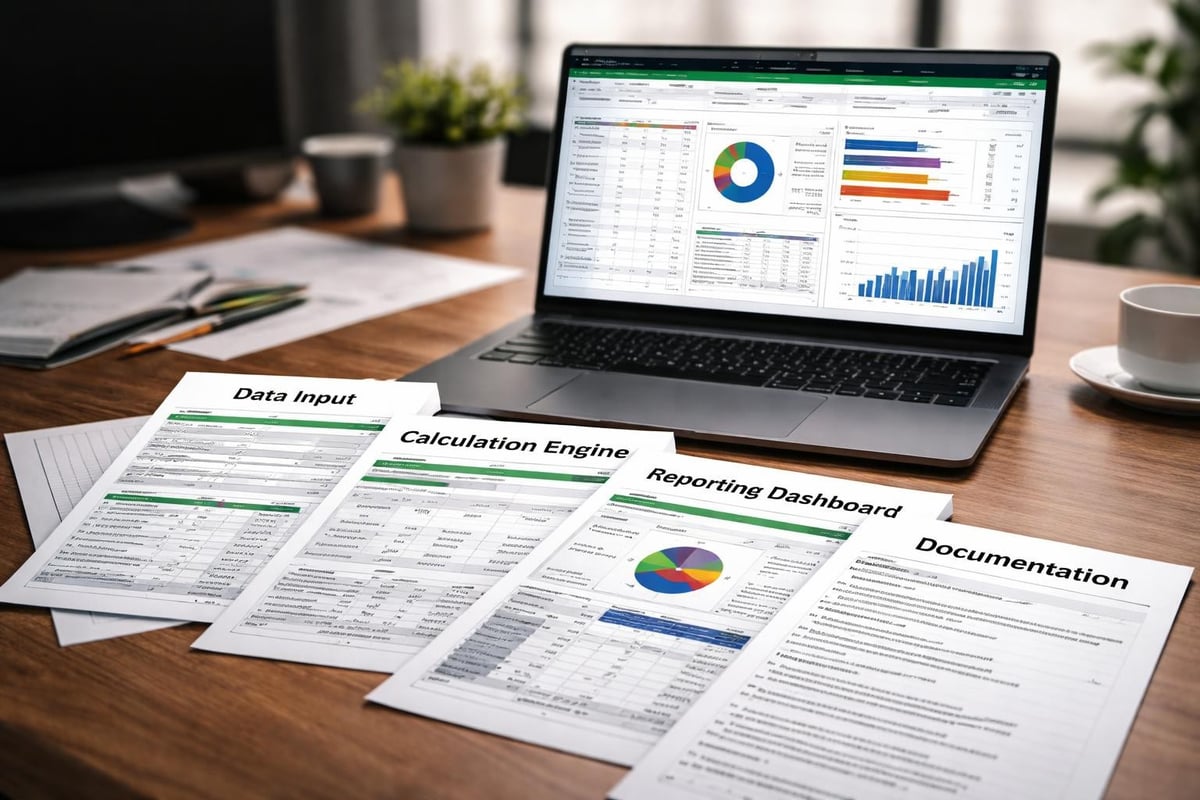
Effective templates separate data entry areas from calculation and reporting sections. This separation prevents accidental formula deletion and makes maintenance easier.
Sheet 1: Data Entry (protected formulas, highlighted input cells)
Sheet 2: Calculations (all formulas, no direct user input)
Sheet 3: Dashboard/Summary (visual presentation of analyzed data)
Sheet 4: Instructions (user guide and change log)
Color coding helps users understand what they can and cannot modify. Light yellow backgrounds typically indicate input cells, while gray or white backgrounds show calculated results. Protect sheets containing formulas while leaving input areas unlocked.
Optimizing Templates for Texas-Specific Requirements
Texas municipalities operate under specific regulatory frameworks that influence template design. Excel templates texas city workers deploy must accommodate state-level reporting standards while serving local operational needs.
State Compliance Considerations
Texas administrative code requires specific data collection and reporting formats for various municipal functions. Templates that align with these requirements reduce manual reformatting when submitting state-level reports.
The Texas Commission on Environmental Quality water rights template exemplifies how state agencies provide standardized formats. Studying these official templates reveals formatting preferences and data structures that align with state expectations.
Integration points with state systems:
- Field names matching state database fields
- Date formats consistent with state requirements (MM/DD/YYYY versus DD/MM/YYYY)
- Calculation methodologies prescribed by state regulations
- Report layouts that can be directly exported or copied into state forms
When you understand both state requirements and local needs, you can build templates that serve dual purposes without requiring duplicate data entry.
Leveraging City Planning Documents
Existing planning documents provide valuable frameworks for template creation. The various city plans available from Texas City demonstrate how strategic initiatives can be broken down into trackable components.
Similarly, the Center, Texas comprehensive plan shows how long-term goals translate into actionable projects. Your templates should bridge this gap between strategic vision and daily operations.
| Planning Level | Template Function | Tracking Metrics |
|---|---|---|
| Strategic (5-10 years) | Goal alignment checker | Annual progress toward multi-year objectives |
| Tactical (1-3 years) | Project portfolio management | Budget utilization, timeline adherence |
| Operational (Daily/Weekly) | Task completion tracking | Individual assignments, deadlines, dependencies |
Advanced Features for Power Users
Once basic templates are functioning well, adding sophisticated features enhances their value. Excel templates texas city power users create often incorporate automation, dynamic reporting, and cross-template integration.
Dashboard Creation and Visualization
Raw data rarely tells compelling stories on its own. Creating dashboards in Excel transforms numbers into actionable insights through charts, conditional formatting, and strategic layout.
Effective dashboard elements include:
- Key performance indicators (KPIs): Single-number metrics showing critical values
- Trend charts: Line graphs showing changes over time
- Comparison visuals: Bar charts comparing departments, projects, or time periods
- Status indicators: Traffic lights or icons showing at-a-glance health
- Summary tables: Condensed views of detailed data
Dashboards should update automatically when underlying data changes. Use named ranges, dynamic formulas, and structured references to ensure charts always reflect current information.
Formula Strategies for Municipal Data
Municipal data often requires specialized calculations. Understanding which formulas serve specific purposes helps you build more capable templates.
Common formula applications:
- SUMIFS and COUNTIFS: Total or count items meeting multiple criteria (department AND date range AND project type)
- VLOOKUP or XLOOKUP: Retrieve information from reference tables (employee names from ID numbers)
- DATE functions: Calculate deadlines, elapsed time, or aging reports
- Conditional logic: Apply different calculations based on categories or thresholds
- Array formulas: Process entire datasets with single formulas (in Microsoft 365)
When formulas become complex, break them into intermediate steps across multiple columns. This approach makes troubleshooting easier and helps others understand your logic.

Security and Access Control
Municipal data often contains sensitive information requiring protection. Excel templates texas city departments share must balance accessibility with appropriate security measures.
Password Protection Strategies
Excel offers multiple protection levels, each serving different purposes. Understanding these options helps you apply appropriate security without hampering legitimate use.
Protection options:
- Sheet protection: Locks formulas while allowing data entry in specified cells
- Workbook protection: Prevents adding, deleting, or renaming sheets
- File encryption: Requires password to open the entire workbook
- Read-only recommendations: Suggests (but doesn't require) opening as read-only
If you need to remove password protection in Excel from templates where the original creator is unavailable, professional assistance ensures you maintain data integrity while regaining access.
For highly sensitive templates, consider combining Excel protection with file-level security through network permissions or document management systems.
Version Control and Documentation
Multiple users editing templates creates version confusion. Implementing clear version control prevents teams from working with outdated formats.
| Version Control Method | Best For | Implementation |
|---|---|---|
| Filename dating | Simple templates | Add YYYYMMDD to filename (Budget_20260402.xlsx) |
| Sheet-based change log | Templates with frequent updates | Dedicated "Version History" sheet documenting changes |
| Network folder structure | Department-wide templates | Separate folders for Current, Archive, and Development versions |
| SharePoint versioning | Enterprise environments | Automated version tracking with restore capabilities |
Document your templates thoroughly. Include a "Read Me" sheet explaining purpose, instructions, update procedures, and contact information for questions.
Training Teams on Template Usage
Even the most sophisticated excel templates texas city organizations create fail if users don't understand them. Effective training ensures adoption and proper utilization.
Developing User Documentation
Written guides complement hands-on training by providing reference material users can consult independently. Structure documentation to serve both new users and experienced ones seeking specific answers.
Documentation components:
- Quick start guide: Basic usage in 5-10 steps
- Detailed instructions: Comprehensive explanation of all features
- FAQ section: Common questions and troubleshooting tips
- Video tutorials: Screen recordings demonstrating key processes
- Template map: Visual guide showing how sheets and data flow connect
Many Texas organizations benefit from personalized Excel training that addresses their specific templates and workflows rather than generic Excel concepts.
Ongoing Support Systems
Initial training gets teams started, but ongoing support maintains competency as staff changes and templates evolve.
Support mechanisms:
- Designated template champions: Power users in each department who can answer questions
- Regular refresher sessions: Quarterly reviews covering updates and best practices
- Help desk system: Structured way to submit questions and track resolutions
- User feedback loop: Regular collection of suggestions for template improvements
Consider scheduling corporate Excel training programs when rolling out major template updates or onboarding multiple new staff members simultaneously.
Maintenance and Continuous Improvement
Templates aren't "set it and forget it" tools. Regular maintenance and iterative improvements keep them relevant and functional as needs evolve.
Scheduled Review Processes
Establish regular intervals for template evaluation. Annual reviews work well for stable templates, while rapidly changing processes may require quarterly assessments.
Review checklist:
- Are all formulas still calculating correctly?
- Do dropdown lists reflect current options (staff names, project types, etc.)?
- Have regulatory requirements changed, requiring template updates?
- Are users experiencing difficulties with any template sections?
- Could new Excel features (available in software updates) improve functionality?
Document all changes in your version log, noting what changed, why, and when. This history proves valuable when troubleshooting issues or training new users.
User Feedback Integration
The people using templates daily often spot improvement opportunities that creators miss. Create channels for collecting and evaluating user suggestions.
Set up a simple feedback form asking:
- What tasks does this template help you accomplish?
- Where do you get stuck or confused?
- What additional features would save you time?
- How could the layout or organization be clearer?
Not every suggestion warrants implementation, but patterns in feedback reveal genuine opportunities for enhancement. When you do implement user suggestions, communicate the changes and credit the contributors. This recognition encourages continued engagement.
Integration with Modern Tools
While Excel remains powerful, modern workflows often involve multiple platforms. Excel templates texas city operations use increasingly need to exchange data with other systems.
Data Import and Export Strategies
Moving data between Excel and other systems efficiently prevents duplicate entry and maintains accuracy. Understanding your import and export options helps you design templates that play well with other tools.
Common integration scenarios:
- Financial systems to Excel: Export transaction details for analysis not available in source software
- Excel to reporting platforms: Feed template outputs into presentation tools
- Database to Excel: Pull current records for Excel-based processing
- Excel to web forms: Structure data for upload to online submission systems
Power Query (Get & Transform Data in Excel) enables automated data connections that refresh with a click. This feature proves particularly valuable when regularly importing data from consistent sources.
Cloud Collaboration Considerations
Many organizations now use Microsoft 365, enabling real-time collaboration on Excel files stored in OneDrive or SharePoint. This environment changes how templates function.
Cloud-specific design factors:
- Co-authoring capabilities allow multiple simultaneous users
- Some Excel features (particularly VBA macros) have limited cloud functionality
- File size impacts cloud performance more than desktop performance
- Version history is automatic, reducing need for manual version control
Test templates thoroughly in their intended environment. A template that works perfectly on desktop Excel may behave differently in Excel Online or mobile apps.
Troubleshooting Common Template Issues
Even well-designed templates occasionally malfunction. Developing troubleshooting skills helps you resolve issues quickly and maintain user confidence.
Formula Errors and Broken Links
The most frequent template problems involve formulas that stop working correctly. Understanding common error types helps you diagnose issues faster.
| Error Type | Common Causes | Resolution Approach |
|---|---|---|
| #REF! | Deleted rows/columns referenced in formulas | Use structured references or named ranges |
| #VALUE! | Wrong data type in calculation | Check input validation and data types |
| #N/A | VLOOKUP/XLOOKUP can't find match | Verify lookup value exists in reference table |
| Circular reference | Formula refers to its own cell | Trace precedents to find loop |
When templates behave unexpectedly after modifications, use Excel's formula auditing tools (Trace Precedents, Trace Dependents, Evaluate Formula) to understand calculation flow.
For persistent issues or templates with complex interdependencies, professional Excel help can save hours of frustration while ensuring proper resolution.
Performance Optimization
Large templates with thousands of formulas may calculate slowly, frustrating users. Several strategies improve performance without sacrificing functionality.
Speed improvement techniques:
- Replace volatile functions (NOW, TODAY, INDIRECT) with static values where possible
- Convert formulas to values after calculations complete
- Use Excel tables (structured references) for efficient formula copying
- Limit conditional formatting to necessary ranges only
- Consider breaking massive templates into linked workbooks
Test template performance on typical hardware. A template that runs smoothly on a powerful desktop may crawl on the basic laptops some users have.
Excel templates texas city professionals use represent more than just organized spreadsheets; they're systems that standardize processes, ensure accuracy, and enable better decision-making across municipal operations. Whether you're tracking development projects, managing budgets, or coordinating departmental activities, the right template structure transforms how you work with data. If your templates aren't performing as needed or you're ready to build more sophisticated solutions, The Analytics Doctor provides expert guidance to diagnose issues, optimize existing workbooks, and create custom templates that perfectly match your workflows.