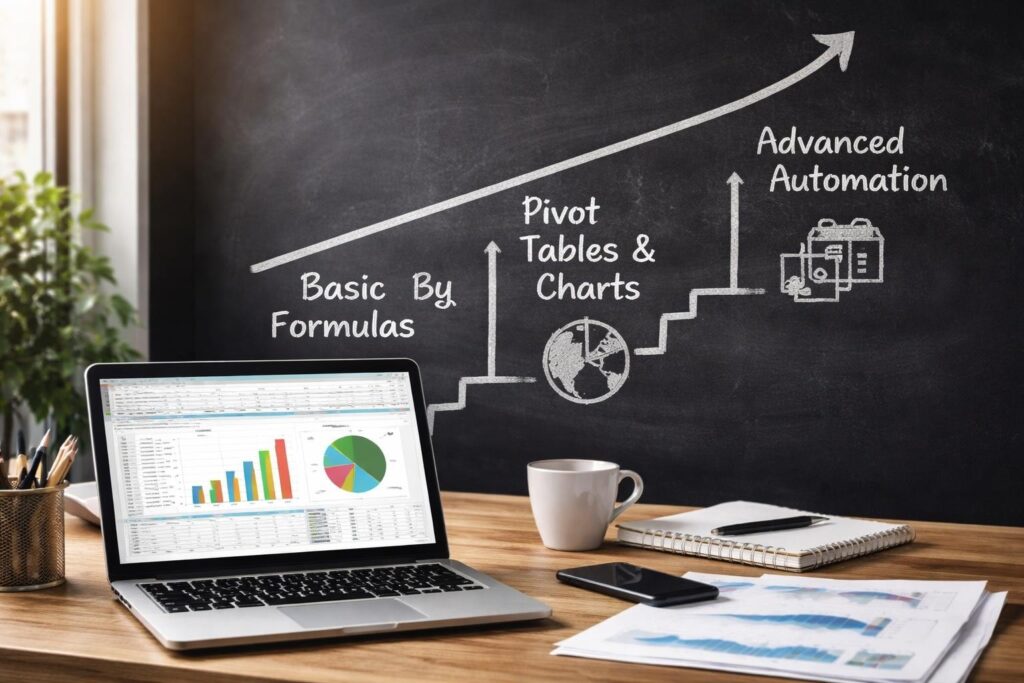
In 2025, trainer excel skills are the foundation for staying relevant in a rapidly changing learning landscape. As training moves further into the digital and data-driven age, mastering advanced Excel techniques unlocks the ability to streamline workflows and deliver measurable results.
This guide is designed to help trainers future-proof their careers by adopting the most in-demand strategies and tools. Discover essential Excel skills, explore the latest features, follow step-by-step mastery methods, and see how real-world applications can elevate your impact. Get ready to capture the competitive edge and drive your training success into the future.
The Evolving Role of Trainers: Why Excel Mastery Matters in 2025
The landscape of training is transforming rapidly as organizations demand more data-driven results. In 2025, a trainer excel skillset is not optional but essential for professionals aiming to thrive in both corporate and educational environments. Data is now at the heart of every decision, from evaluating learning outcomes to optimizing resource allocation.
Trainers who master Excel can analyze complex datasets, visualize trends, and present actionable insights. This ability sets them apart, as 85% of businesses now report increased reliance on data analytics for training, according to the LinkedIn Workplace Learning Report 2024. As a result, the trainer excel role has evolved from content delivery to strategic data interpretation.
Credibility and impact in training roles are closely tied to Excel proficiency. Employers expect trainers to demonstrate not just instructional expertise but also technical skills that drive measurable results. For instance, with advanced Excel functions, trainers can quickly assess learner performance, identify gaps, and tailor interventions for maximum effectiveness.
Consider a case where a trainer excel user leverages interactive dashboards to track learner progress and demonstrate ROI. By building dynamic visualizations, trainers can provide stakeholders with real-time updates on attendance, engagement, and outcomes. For those seeking to build similar capabilities, the Excel dashboard creation guide offers a step-by-step approach to constructing impactful dashboards that align with modern training objectives.
Hybrid and remote training environments further amplify the importance of trainer excel skills. With distributed teams and virtual classrooms, trainers must consolidate data from multiple sources, ensure accuracy, and share insights seamlessly. Excel's collaborative tools, such as shared workbooks and cloud integration, empower trainers to maintain productivity and transparency regardless of location.
Employer expectations are shifting rapidly. Job descriptions for 2025 now list Excel as a core competency for trainer excel positions, reflecting its role in streamlining workflows and enabling evidence-based decision-making. The following table summarizes key expectations for trainers in the coming year:
| Employer Expectation | Description |
|---|---|
| Data Analysis Proficiency | Ability to interpret and report on key metrics |
| Dashboard Creation Skills | Build and update real-time visualizations |
| Collaboration & Sharing | Use cloud tools for team-based projects |
| Automation Knowledge | Streamline repetitive tasks with macros/VBA |
The competitive edge is clear. Trainers with advanced Excel skills command higher salaries, secure more opportunities, and enjoy greater job security. As organizations invest more in analytics, those who can bridge the gap between data and learning outcomes will be the most sought-after professionals. In this new era, embracing the trainer excel mindset is a strategic move toward career longevity and leadership in the field.

Essential Excel Skills Every Trainer Needs for 2025
To thrive as a trainer excel professional in 2025, mastering essential Excel skills is more important than ever. The landscape is evolving, and trainers need to be agile, data-savvy, and efficient. Below, we break down the core competencies that every trainer excel expert must possess to deliver impactful, data-driven training.

Data Management and Cleaning Techniques
A trainer excel professional must excel at managing and cleaning data from diverse sources. Trainers often deal with attendance logs, performance metrics, and feedback forms in multiple formats.
- Import data from CSV files, databases, and web sources directly into Excel.
- Use Power Query to automate repetitive cleaning tasks, saving valuable time.
- Remove duplicates, handle missing entries, and standardize data formats for consistency.
For example, a trainer excel specialist can streamline attendance tracking across multiple sessions. By importing and transforming raw data, trainers ensure accuracy and readiness for analysis. Clean, reliable data forms the foundation for every successful training program.
Advanced Data Analysis and Visualization
Data analysis and visualization empower a trainer excel professional to uncover deep insights and communicate results effectively.
- Leverage PivotTables and PivotCharts to summarize large datasets quickly.
- Apply conditional formatting for instant visual cues on learner performance.
- Build interactive dashboards for real-time reporting and executive overviews.
Imagine visualizing training effectiveness by department using a color-coded dashboard. This approach enables a trainer excel expert to identify trends, address gaps, and demonstrate the tangible impact of training initiatives. Clear, compelling visuals drive better decision-making and engagement among stakeholders.
Automation with Macros and VBA
Automation is a game changer for any trainer excel user. Repetitive processes can slow down productivity and introduce errors.
- Record macros to automate routine tasks such as formatting or data entry.
- Explore basic VBA scripting to create custom solutions tailored to training needs.
- Example: Automate feedback form processing, reducing manual effort and turnaround time.
By embracing automation, a trainer excel professional not only saves time but also ensures consistency across all training documents. This efficiency translates directly into higher quality and faster delivery of training outcomes.
Collaborative Features and Cloud Integration
Collaboration is central to modern training environments, especially with remote and hybrid teams. Trainer excel specialists must harness Excel’s collaborative features for seamless teamwork.
- Use Excel Online for real-time sharing and co-authoring.
- Integrate with Microsoft Teams and OneDrive to centralize resources and communications.
- Example: Collaboratively develop and update curriculum materials with colleagues.
Real-time collaboration empowers trainer excel professionals to share insights, update materials instantly, and protect sensitive data. These skills are vital for ensuring smooth project workflows and fostering a culture of teamwork.
Leveraging New Excel Features for 2025
Staying ahead means adopting the latest Excel innovations. Trainer excel experts must be fluent in new tools and functions that streamline analysis and reporting.
- Use dynamic arrays, XLOOKUP, and LET functions for more efficient formulas.
- Enrich datasets with new data types, such as Stocks, Geography, or custom fields.
- Example: Analyze survey results instantly with dynamic arrays.
To explore the most critical Excel skills professionals should master by 2025, including AI integration and advanced data analysis, see the Top Excel Skills for Professionals in 2025. Adopting these features ensures a trainer excel professional remains at the forefront of training technology and delivers measurable value.
Step-by-Step Guide: Mastering Excel Skills for Trainers
Mastering trainer excel skills is essential for trainers preparing for the evolving demands of 2025. This step-by-step guide is designed to help you assess, build, and advance your expertise methodically. Each step provides actionable strategies, ensuring your trainer excel journey is practical and results-oriented.

Step 1: Assess Your Current Skill Level
Begin your trainer excel journey by evaluating your present abilities. Use self-assessment checklists and online quizzes to pinpoint your strengths and areas for improvement. Consider your familiarity with data import, formulas, and collaboration features.
Identify specific gaps that could impact your training delivery. Setting clear learning goals will streamline your progress and keep you focused. For a detailed breakdown of skill levels and what each entails, consult the Excel skills levels explained resource.
Regular self-evaluation ensures you are always moving forward on your trainer excel mastery path.
Step 2: Build a Strong Foundation
The success of any trainer excel initiative depends on a solid understanding of core Excel functions and efficient navigation. Start by mastering essential formulas and tools:
| Function | Purpose |
|---|---|
| SUMIF | Conditional summing |
| COUNTIF | Conditional counting |
| IFERROR | Error handling |
| VLOOKUP/XLOOKUP | Data lookup and matching |
Familiarize yourself with Excel’s interface, shortcuts, and file organization. Practice exercises, such as calculating training hours or summarizing attendance, will solidify your foundation.
Consistent practice will help you internalize these trainer excel basics, enabling you to work faster and with greater confidence.
Step 3: Advance to Data Analysis and Visualization
Once you have the basics, elevate your trainer excel expertise by applying data analysis and visualization techniques. Work with PivotTables to summarize complex training data, and use PivotCharts for visual insights.
Conditional formatting can instantly spotlight trends in learner performance. Challenge yourself to build an interactive dashboard, such as a real-time attendance tracker or training effectiveness report.
Use sample datasets to simulate real-world scenarios. This hands-on approach ensures your trainer excel skills translate directly into impactful training outcomes. Remember, visualizing data makes it easier to communicate results to stakeholders.
Step 4: Automate Tasks and Processes
Trainer excel mastery includes automating repetitive tasks, saving valuable time. Start by recording macros for common workflows, such as preparing feedback summaries. Here’s a simple macro example:
Sub AutoFillFeedback()
    Range("B2:B100").Copy
    Range("D2:D100").PasteSpecial
End Sub
Explore basic VBA scripting for customized solutions like automated certificate generation or personalized emails. Automation reduces errors and allows trainers to focus on high-value activities.
With trainer excel automation, you can streamline processes and boost your efficiency in any training environment.
Step 5: Collaborate and Share Insights
Collaboration is vital for modern trainer excel professionals. Use Excel Online for real-time co-authoring and sharing with remote teams. Integrate with Microsoft Teams and OneDrive to centralize resources and facilitate group curriculum development.
Follow best practices for protecting sensitive training data, using password protection and controlled access. Sharing insights in clear, accessible formats keeps everyone aligned and informed.
Efficient collaboration strengthens your trainer excel impact and enhances the overall quality of your training programs.
Step 6: Stay Updated with New Excel Features
Trainer excel mastery is an ongoing process. Monitor Microsoft 365 updates and subscribe to reputable Excel blogs for the latest features. Engage in Excel communities to exchange tips and solve challenges.
Staying current ensures your trainer excel skills remain relevant and future-proof as new tools emerge.
Real-World Applications: Excel in Training and Development
In today's data-driven landscape, trainer excel expertise is indispensable for transforming raw information into actionable insights. Trainers leverage Excel to design, track, and optimize every aspect of the learning process, ensuring measurable outcomes and streamlined workflows.

Designing Interactive Training Schedules and Calendars
Efficient scheduling is at the heart of any successful training program. With trainer excel skills, you can build dynamic calendars that automatically update session dates, highlight conflicts, and accommodate last-minute changes.
- Conditional formatting makes session overlaps stand out.
- Dynamic formulas calculate total training hours.
- Linked dropdowns enable quick session type selection.
These interactive tools help trainers manage complex programs with ease, reducing administrative time and errors.
Tracking Learner Progress and Performance Metrics
Monitoring learner progress is vital for evaluating training effectiveness. Trainer excel dashboards allow you to visualize key metrics such as attendance, assessment scores, and completion rates in real time.
Using PivotTables and charts, you can compare department performance, identify at-risk participants, and adapt content accordingly. Automated alerts highlight areas needing immediate attention, ensuring no learner falls behind.
Analyzing Feedback and Evaluation Data
Continuous improvement relies on actionable feedback. Excel's data analysis tools make it easy to aggregate post-training surveys, categorize responses, and spot trends.
| Feedback Category | Number of Responses | Improvement Suggestions |
|---|---|---|
| Content Quality | 120 | Update examples |
| Trainer Delivery | 110 | Increase interaction |
| Venue/Online Tech | 90 | Enhance connectivity |
Trainer excel expertise ensures that evaluation data is not just collected but used to refine future sessions for better outcomes.
Budgeting and Resource Allocation for Training Programs
Managing budgets is another area where trainer excel skills pay dividends. By building cost tracking templates and resource allocation models, trainers can forecast expenses, monitor real-time spending, and justify investments to stakeholders.
For those seeking to automate advanced financial reporting or ROI calculations, the Advanced Excel training course offers practical tools tailored for training professionals.
Integrating Excel with LMS and HR Systems
Seamless data flow is crucial in modern training environments. Integrating Excel with Learning Management Systems (LMS) and HR platforms ensures that attendance, certification, and performance data remain synchronized.
Trainer excel workflows can import, clean, and export data between systems, reducing manual entry and minimizing errors. This integration supports compliance tracking and personalized learning paths.
Case Study: Transforming Manual Reporting with Excel Automation
Consider a corporate trainer who spent hours compiling monthly reports. By harnessing trainer excel automation, they created VBA scripts to generate certificates and update progress dashboards automatically. This not only saved time but also improved report accuracy and stakeholder satisfaction.
From scheduling to analytics, trainer excel mastery turns routine tasks into strategic opportunities, driving efficiency and measurable impact in every training initiative.
Top Resources and Tools for Ongoing Excel Mastery
To stay at the forefront in 2025, every trainer excel professional needs a toolkit of reliable resources for continuous growth. Mastery is not a one-time achievement but a journey, and the right resources make all the difference. Whether you are refining your skills or exploring new Excel features, these resources support ongoing development and real-world impact.

Recommended Online Courses and Certifications
Investing in structured learning is essential for every trainer excel professional aiming to stay ahead. Microsoft’s official Excel certification pathways, such as the Microsoft Office Specialist (MOS) program, provide recognized credentials that validate your expertise.
Leading online platforms offer specialized courses tailored for trainers:
- LinkedIn Learning: Practical courses on Excel for trainers and educators.
- Coursera: University-backed programs that cover advanced Excel analytics.
- Udemy: Affordable, bite-sized lessons for all skill levels.
For those seeking a curated list of the most relevant and up-to-date programs, the Best Excel Courses for 2025: Skills to Stay Ahead guide reviews top courses designed to future-proof your trainer excel skill set. Look for interactive modules, real-world scenarios, and assessments to ensure the learning sticks.
Essential Excel Templates and Add-Ons
Templates and add-ons transform how a trainer excel expert manages tasks. Ready-made solutions save time and reduce errors, letting you focus on delivering value.
Popular templates include:
- Attendance and participation trackers
- Feedback analyzers for post-session surveys
- Dynamic training dashboards
Add-ons, such as Power Query and third-party data visualization tools, extend Excel’s native capabilities. Try using template galleries within Excel or exploring Microsoft’s official add-ins marketplace to find resources that streamline repetitive trainer excel activities.
Community Forums and Peer Support
The collective wisdom of the Excel community is invaluable for every trainer excel professional. Engaging with expert forums keeps you updated on new techniques and troubleshooting tips.
Top communities to join:
- Microsoft Tech Community: Direct access to Excel experts.
- Reddit r/excel: Crowdsourced solutions for real-world challenges.
- Local and online user groups: Regular events and workshops.
For those interested in collaborative learning, Excel group training options offer structured environments for teams of trainers to upskill together, share insights, and solve problems collectively. Peer support accelerates progress and builds confidence in mastering trainer excel challenges.
Books, Blogs, and Newsletters
Continuous learning for a trainer excel specialist requires staying informed through trusted publications. Books provide in-depth knowledge, while blogs and newsletters deliver timely updates.
Consider these essential resources:
- Books: “Excel Bible” by John Walkenbach, “Excel Power Pivot & Power Query For Dummies” by Michael Alexander.
- Blogs: Microsoft Excel Blog, Chandoo.org, MyExcelOnline.
- Newsletters: ExcelJet, Excel Campus.
Subscribe to a mix of these to ensure you never miss out on new features, best practices, or innovative trainer excel strategies.
Advanced Tools: Power BI and Integration Tips
Expanding your trainer excel toolkit with advanced tools like Power BI unlocks deeper insights and more engaging reports. Power BI seamlessly integrates with Excel, allowing you to:
- Combine datasets from multiple sources
- Build interactive dashboards for executive presentations
- Share visual reports with stakeholders
Integration tips for trainers:
- Use Excel’s “Publish to Power BI” feature for real-time data visualization.
- Connect Excel with Microsoft Teams and SharePoint for collaborative reporting.
- Automate data flows between Excel, LMS, and HR systems to reduce manual work.
For any trainer excel professional, mastering these integrations ensures your training programs deliver measurable results and support data-driven decisions.